

The first hard freeze of the season doesn’t announce itself. One afternoon the asphalt looks fine, and by the next morning meltwater that seeped into a hairline crack has expanded into a wedge of ice, prying the pavement apart from the inside. At this elevation, that cycle repeats dozens of times between November and April, and how you treat your driveway during those months decides whether it comes out of spring intact or covered in fresh damage.
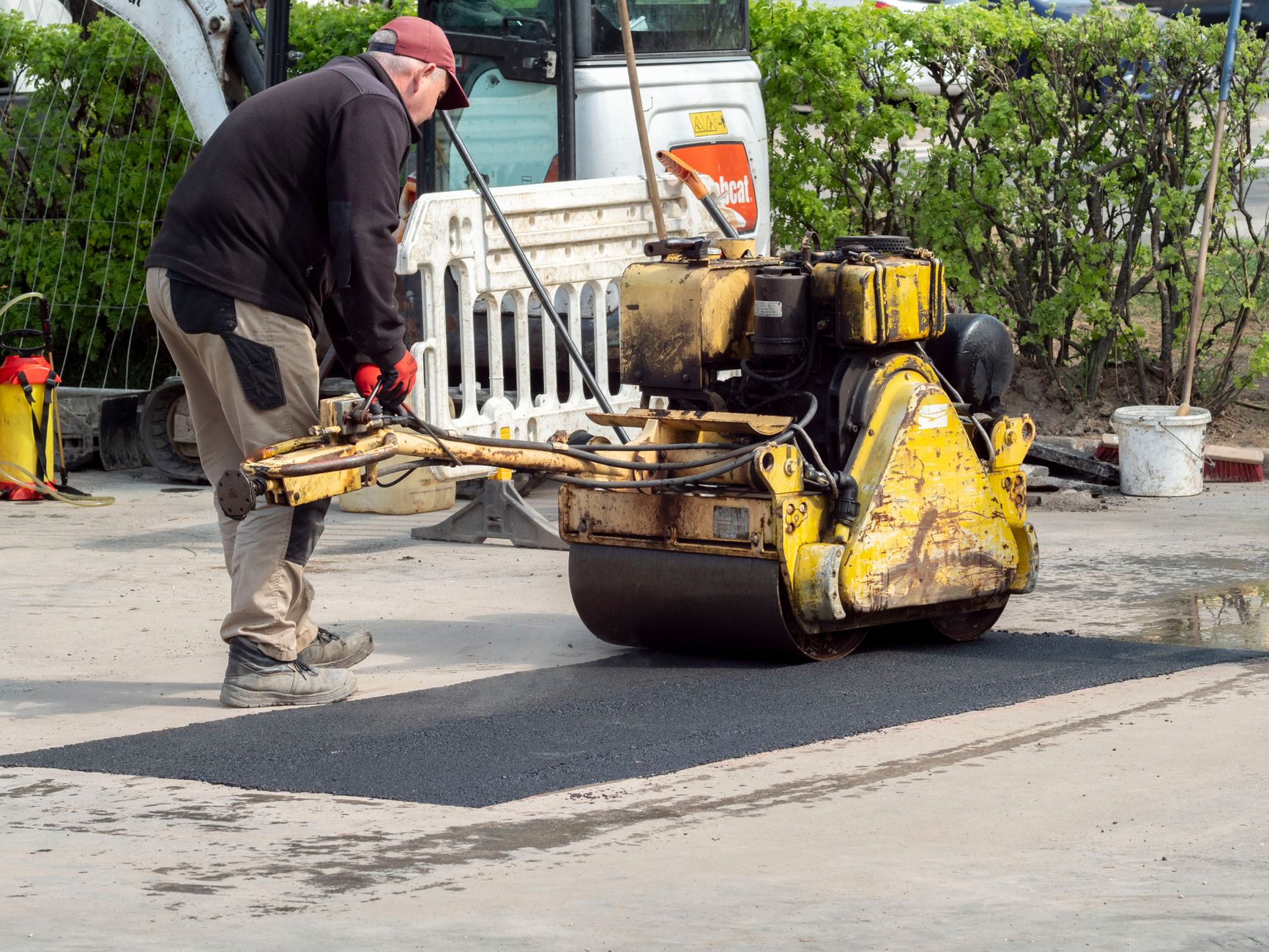
Winter maintenance isn’t complicated, but the habits most people fall into by default tend to work against the pavement rather than for it. A little deliberate thought about what you spread, how you clear, and what you check afterward goes a long way.
Which De-Icers Punish Your Pavement and Which Play Nice?
The bag of ice melt in your garage matters more than most homeowners realize. Rock salt, or sodium chloride, is cheap and everywhere, but it accelerates the freeze-thaw damage that already plagues pavement in the high country. It lowers the freezing point of water, which means more liquid finding its way into cracks before refreezing and expanding. Over a few seasons, that translates directly into surface scaling and widened cracks.
Calcium chloride and magnesium chloride work at colder temperatures and are gentler on asphalt in reasonable amounts, though they still leave residue you’ll want to rinse off in spring. The kindest option to your surface is often the least glamorous: sand or a fine grit, which provides traction without any chemical attack on the binder holding your pavement together.
Whatever you choose, moderation is the real rule. Dumping a heavy layer of any de-icer on the assumption that more is better simply concentrates the damage. Spread thinly, spread only where you need traction, and skip the products loaded with unnamed chemical blends that make no promises about pavement safety.
Are You Plowing and Shoveling in a Way That Scars the Surface?
Snow removal does more physical damage to driveways than most people would guess, and almost all of it is avoidable. The classic culprit is a metal plow blade or shovel edge scraping directly against the asphalt, gouging the surface and chipping away at edges that are already the weakest part of any paved area.
Set your plow or snowblower to leave a thin cushion of snow rather than scraping down to bare pavement. A rubber-edged shovel or a plow with skid shoes keeps steel off the surface entirely. When you’re clearing by hand, push the snow rather than chipping at ice that has bonded to the asphalt, because that chipping motion takes bits of pavement with it.
Where you pile the snow counts too. Heaping it on one edge of the driveway means that spot sits saturated as it melts, soaking the pavement and the base beneath it long after the rest has dried. Spread the piles out, keep them off the most vulnerable seams, and give meltwater somewhere to drain away instead of pooling. If your driveway went into winter with sealcoat that had started to thin, a contractor such as Paul’s Asphalt Service LLC. can tell you whether the surface was well protected against the season’s abuse or whether it took the winter unarmored.
What Should You Look For Once the Snow Finally Melts?
Spring reveals whatever winter did. The moment the driveway is clear and dry, walk its full length and look closely.
Cracks that were thin in the fall often reopen wider, and new ones appear where water worked into the surface and froze. Check the low spots for standing water a day after any melt, since pooling signals either settling in the base or a drainage problem that will only worsen. Look at the edges for crumbling and at the surface for scaling, that rough, flaky texture that means the top layer is breaking down. Rinse off any leftover de-icer residue while you’re at it.
Catching these signs early is the whole point of the inspection. A crack sealed in April is a minor task; the same crack left through another wet season becomes a structural problem that spreads into the base.
So the decision in front of you isn’t really whether to maintain the driveway over winter, but how carefully. You can let the default habits run their course and hope for the best in spring, or you can choose your de-icer, clear the snow, and inspect the thaw with the pavement’s survival in mind. The months of freeze and melt will test whichever path you pick.